
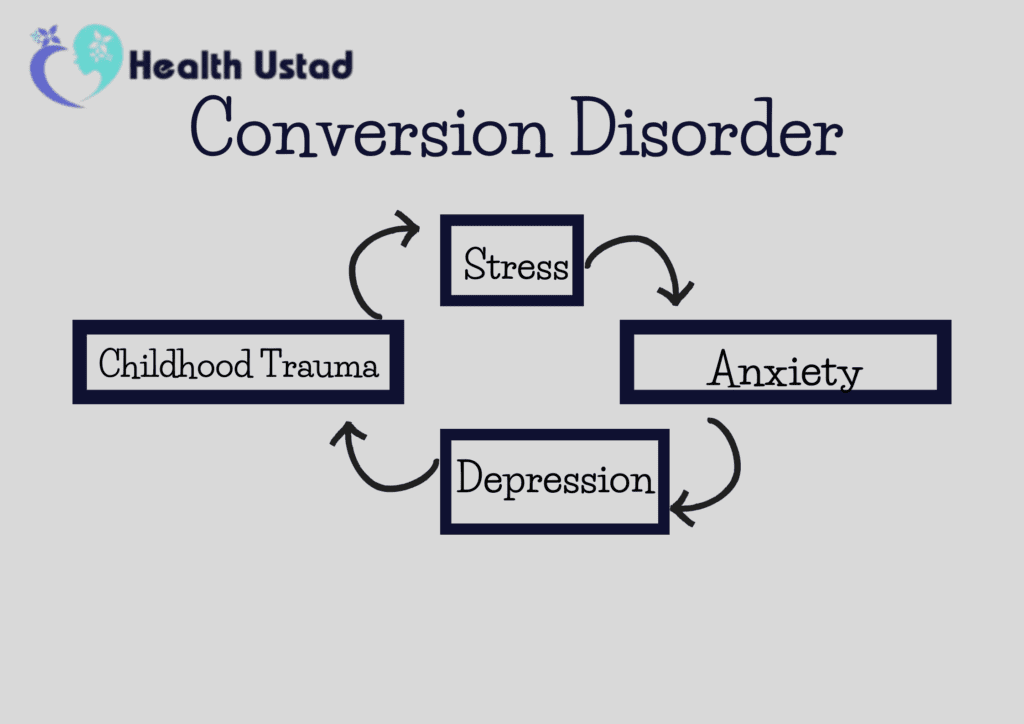
What is Conversion Disorder ICD 10?
Conversion Disorder is mental health condition that effect the mind and body of the individual. When emotional pain and emotional distress ends up by showing physical symptoms like weakness, loss of sensation and tremors. These physical symptoms are shown without any medical condition. Conversion disorder ICD 10 falls under ICD 10 classification of conversion disorder.
What is Diagnostic Criteria of Conversion disorder ICD 10?
According to Diagnostic and Statistical Manual of Mental Disorder 5 TR, the diagnostic criteria of conversion disorder is:
Diagnostic Criteria A.
One or more symptoms of altered sensory and motor function are present.
Diagnostic Criteria B.
There is no clinical resemblance between described physical symptoms and neurological evidences.
Diagnostic Criteria C.
The symptoms expressed by individual are not due to any other medical substance.
Diagnostic Criteria D.
The symptoms disturb the personal and occupational life of individual.
What are Symptoms of Conversion Disorder ICD 10?
Conversion disorder ICD 10, presents with a variety of physical symptoms. These symptoms can include neurological conditions. Some common examples are:
- Tremors, walking in a strange way, and paralysis are all examples of abnormal movement.
- When you have conversion disorder, you may feel numb, tingle, or lose your vision or hearing.
- People with conversion disorder with motor symptoms may suddenly become weak in their muscles. They have trouble speaking, or have trouble coordinating their movements.
- Conversion disorder with mixed symptom presentation is marked by the coexistence of sensory and motor symptoms.
One thing that makes these symptoms different is that they often happen right after a traumatic or emotionally upsetting event. Someone might go blind for a short time after seeing a horrible accident. Individual may not be able to move their arm because they are so scared.
What are Causes of Conversion Disorder?
The exact cause of conversion disorder ICD 10 is still unknown. But research shows that emotional trauma, long-term stress, or unresolved psychological conflict are important factors. The term “conversion disorder” comes from the fact that these mental problems show up as physical symptoms. These are some things that can make you more likely to get sick.
- Childhood trauma or abuse.
- A lot of stress on the mind.
- Always having anxiety or depression.
- A family history of dissociative and conversion disorders.
If someone has conversion disorder and a motor symptom, like weakness or paralysis. These symptom could mean that the person is having a hard time dealing with something bad. In the same way, having sensory symptoms of conversion disorder may mean that you unconsciously want to “not see” or “not feel” something that is bothering you.
What are Treatments for Conversion Disorder?
How to deal with Conversion Disorder ICD 10 talks about both the body and the mind. The main goal is to help the person understand and deal with the mental stress that is making them feel bad physically.
-
Cognitive-Behavioral Therapy (CBT).
CBT helps patients understand how their mental health issues are linked to their physical health issues. In therapy, students learn better ways to handle stress and deal with their emotions. It is especially helpful for people who are afraid or avoid things when they move in a strange way or lose their sense of touch.
2. Physical Therapy.
People with conversion disorder who have motor symptoms can get their normal movement and confidence back through gradual physical therapy. Physical therapists show patients how to move safely and well again.
3. Psychotherapy and stress management.
Individual or group therapy can help you figure out what emotional problems or trauma might be making your disorder worse. Mindfulness, relaxation techniques, and ways to lower stress can all help with the number and severity of symptoms.
4. Medications.
There is no one treatment that directly targets conversion disorder. However, antidepressants or anti-anxiety medications may be prescribed if there are other mental health issues.